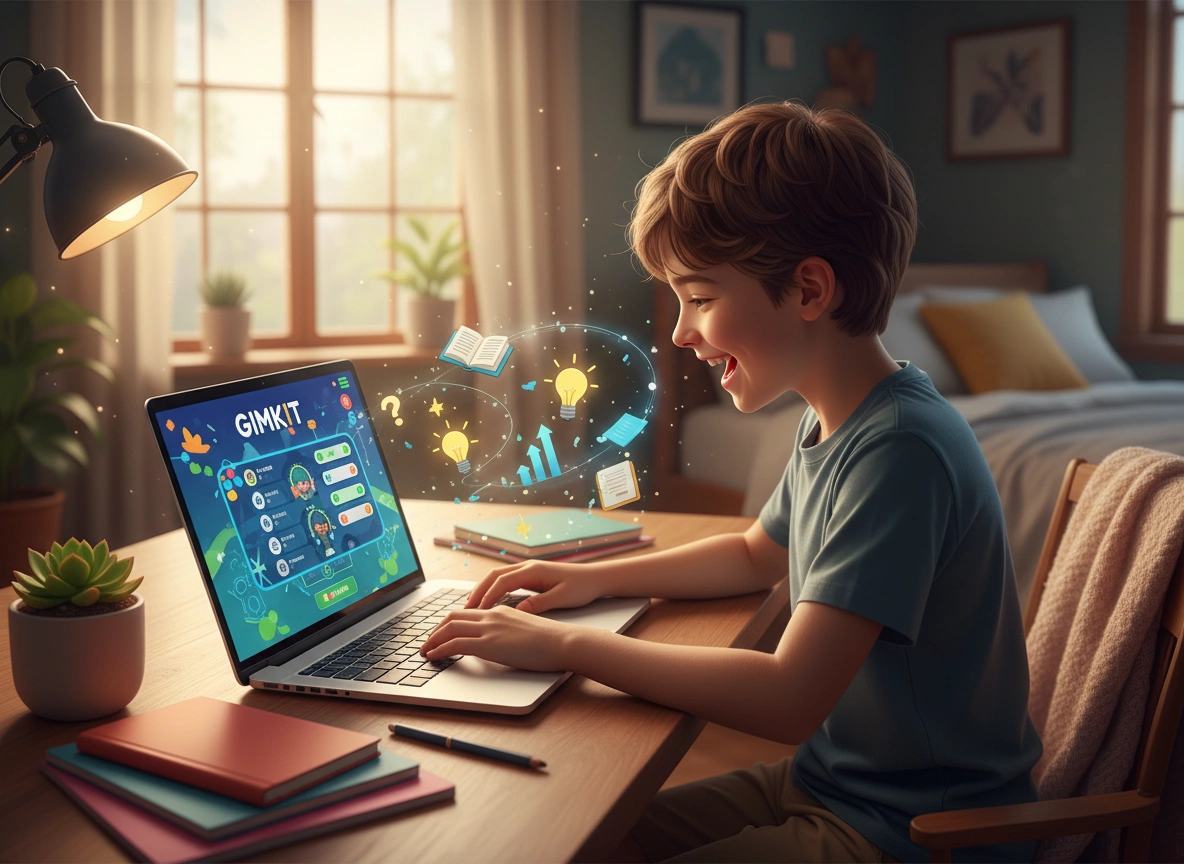
Remote learning presents a unique set of hurdles for educators. Without the physical presence of a classroom, the energy often dips, distractions multiply, and the vital connection between teacher and student can feel tenuous. Keeping students motivated through a screen requires more than just a digital textbook or a Zoom lecture; it demands interaction, competition, and a sense of shared purpose.
This is where game-based learning platforms have become indispensable. Among them, Gimkit has emerged as a standout tool for revitalizing the remote classroom. By blending high-stakes gamification with rigorous academic review, Gimkit transforms passive screen time into an active, collaborative learning experience.
The Engagement Gap in Remote Education
Before understanding Gimkit’s success, we must address the problem it solves. Remote learning, while flexible, often suffers from an “engagement gap.”
In a traditional classroom, a teacher can read the room. They can see when eyes glaze over or when a concept sparks excitement. In a virtual setting, that feedback loop is broken. Students often turn off cameras, hesitate to unmute themselves, and struggle with the isolation of learning from home.
Several factors contribute to this disengagement:
- Zoom Fatigue: Constant video calls are cognitively draining.
- Lack of Immediate Feedback: Students often wait days for grades, losing the connection between effort and result.
- Social Isolation: The lack of peer-to-peer interaction makes learning feel like a solitary chore rather than a communal activity.
Educators need tools that do more than deliver content—they need platforms that build community and create excitement. This is the niche Gimkit fills.
What is Gimkit?
Gimkit is a live quiz learning game platform created by students, for students. It was developed by Josh Feinsilber while he was still in high school, giving it a unique perspective on what actually keeps kids interested.
Unlike traditional quiz platforms where points are arbitrary, Gimkit introduces an in-game economy. Students answer questions at their own pace. Correct answers earn them “virtual cash.” They can then use this cash to buy upgrades and power-ups in the “shop.”
These upgrades might multiply the cash they earn per question, provide insurance against wrong answers, or even allow them to freeze other players’ screens or blur their vision (in a playful, competitive way). This strategic layer means that knowing the material is important, but how you manage your resources determines if you win.
Features That Drive Remote Engagement
Gimkit’s specific design choices make it particularly potent for remote learning environments.
1. High-Octane Gamification
Gamification is often a buzzword, but Gimkit applies it with depth. The mechanic of earning and spending money taps into the same psychological reward loops found in video games. Students aren’t just answering questions to get a grade; they are answering questions to upgrade their “streak bonus” so they can afford a “multiplier.”
This creates a sense of agency. A student who might not be the fastest reader or the quickest thinker can still win by making smart economic decisions with their earnings. This levels the playing field and keeps diverse types of learners engaged.
2. The Power of Repetition Without Boredom
One of the biggest challenges in teaching is getting students to review material enough times for it to stick. Gimkit solves this by allowing questions to cycle. Students might see the same question four or five times in a ten-minute session.
In a normal worksheet, answering the same question five times is punishment. In Gimkit, it’s an opportunity. Seeing a familiar question means easy money. It builds confidence and reinforces memory through spaced repetition. By the end of a game, students have unwittingly drilled the core concepts multiple times.
3. Real-Time Feedback and Formative Assessment
For teachers, the “Data Dashboard” is a lifesaver. While students play, the teacher receives live data on class performance.
- Identifies Struggle Points: Teachers can see which specific questions the class is missing most frequently.
- Individual Tracking: It highlights students who are falling behind, allowing for immediate intervention or breakout room support.
- Post-Game Reports: After the session, Gimkit generates a detailed report showing individual accuracy and overall class mastery. This transforms a fun game into a valid formative assessment tool.
Fostering Collaboration in a Virtual Space
While competition is a strong motivator, isolation is the enemy of remote learning. Gimkit addresses this through its collaborative game modes, most notably “Team Mode” and special events like “The Floor is Lava.”
Team Mode
In Team Mode, students are randomly assigned to groups. They pool their earnings to reach a collective goal. This forces communication. Students have to coordinate: “Who is buying the multiplier?” or “We need to save up for the team bonus!”
In a remote setting, this gives students a reason to unmute and talk to each other. It shifts the focus from “I need to win” to “We need to succeed.”
“The Floor is Lava”
This cooperative mode requires the entire class to work together to keep a virtual construction project above rising lava. If the class stops answering questions correctly, the lava rises. If they answer correctly, they build up.
This mode is purely cooperative. There is no individual winner. The entire class wins or loses together. Teachers report that this mode generates some of the most intense and positive social interactions in their remote classes, with students cheering each other on in the chat to “keep building!”
Real-World Impact: Teachers and Students Speak
The effectiveness of Gimkit isn’t just theoretical. Educators across the globe saw tangible shifts in their remote classrooms upon adopting the platform.
Consider the case of a middle school history teacher in Ohio during the height of pandemic lockdowns. Struggling with low attendance and silent Zoom calls, she introduced Gimkit as a Friday review activity. Within weeks, students were logging in early, asking if they could play. The chat, usually dormant, became active with students discussing strategies and reacting to the game’s twists.
Similarly, a high school Spanish teacher noted that Gimkit helped overcome the anxiety of foreign language practice. Students were so focused on the game economy that they forgot to be self-conscious about vocabulary errors. The “low stakes” environment of the game actually led to “high stakes” retention of the language.
One student testimonial highlights the difference: “Zoom classes usually make me want to sleep. But in Gimkit, I have to pay attention because I want to buy the ‘Thanos Snap’ power-up. It makes the boring stuff actually matter.”
The “KitCollab” Feature
A relatively newer addition, KitCollab, allows students to contribute to the creation of the game. The teacher provides a topic, and students submit their own questions.
This is a powerful pedagogical move. Writing a question requires a deeper understanding of the material than simply answering one. It gives students ownership over their learning. When a student sees their own question pop up during the live game, there is a distinct moment of pride and validation that bridges the digital distance.
Beyond the Pandemic: The Future of EdTech
While Gimkit proved its worth during the emergency shift to remote learning, its utility extends far beyond that era. The hybrid model of education—where digital tools supplement face-to-face instruction—is here to stay.
Gimkit demonstrates that “engagement” isn’t about flashy graphics; it’s about psychology. It understands that students crave autonomy, mastery, and purpose.
As we look toward the future of educational technology, tools like Gimkit set the standard. They show us that learning can be rigorous and joyful simultaneously. They prove that even through a screen, we can build a classroom culture that is vibrant, competitive, and deeply collaborative.
Conclusion
Remote learning does not have to be a passive experience. It does not have to be defined by silence and turned-off cameras. By leveraging tools like Gimkit, educators can inject energy back into the curriculum.
Gimkit enhances student engagement not by tricking students into learning, but by aligning the learning process with the mechanics of play. It turns repetition into a strategy, assessment into a game, and isolation into collaboration. For teachers looking to bridge the distance in digital learning, Gimkit offers a bridge built on fun, feedback, and financial strategy—a combination that keeps students coming back for more.
Please click here for more info.
